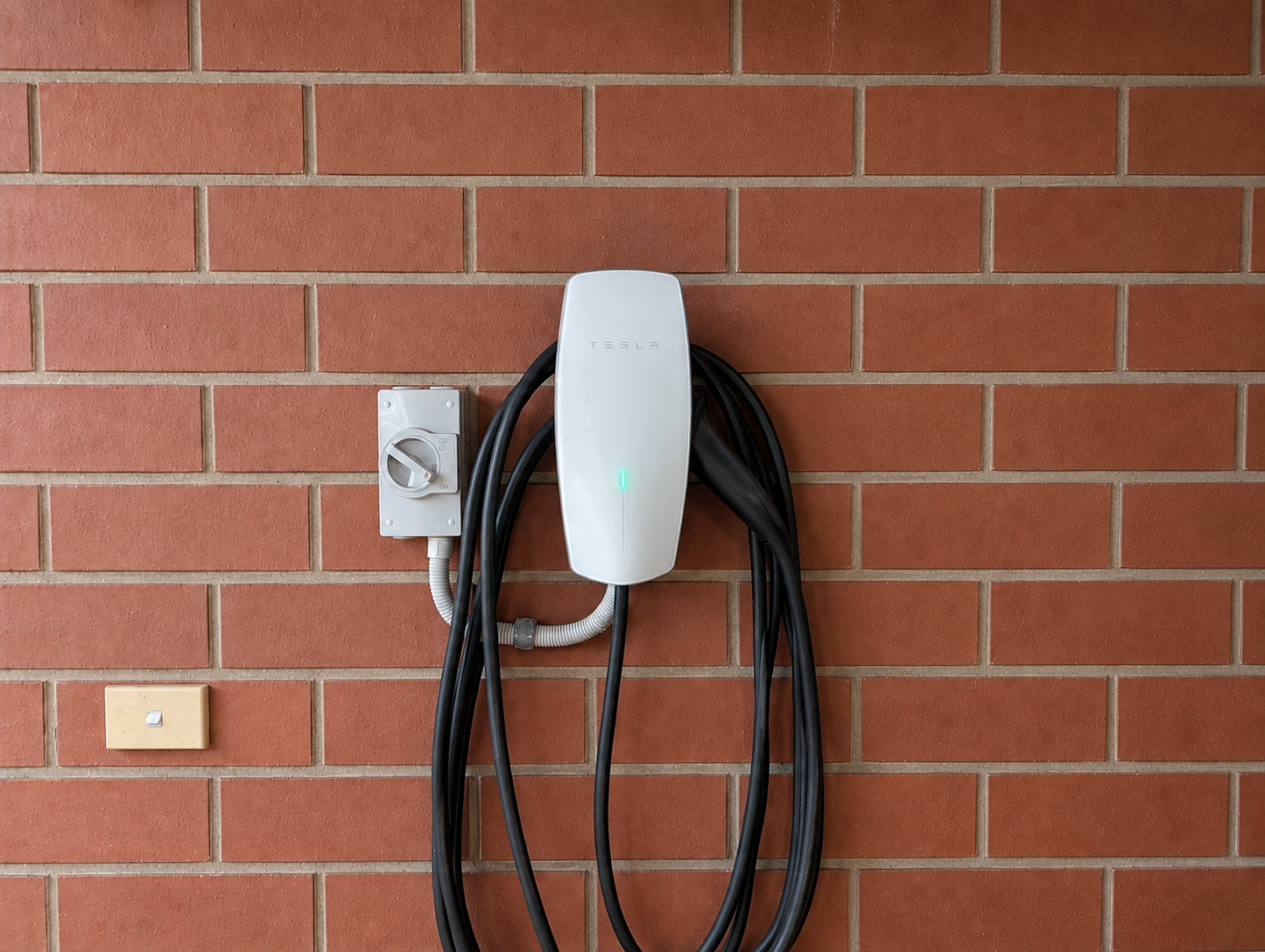
Why Home EV Charging Is a Game-Changer for Sydney Drivers
Public charging stations are improving rapidly, but nothing beats the convenience of waking up to a fully charged vehicle every morning. Home EV charging means you're always starting your day with a full battery — no detours, no waiting, no range anxiety.
For Sydney homeowners with a garage, carport, or off-street parking, a dedicated home charging solution is one of the smartest upgrades you can make alongside your EV purchase. It adds convenience, protects your vehicle's battery with consistent managed charging, and can even be integrated with solar and battery storage systems — a popular combination in energy-conscious Sydney households.
Understanding the Types of EV Chargers
Not all EV chargers are created equal. Before you commit to an installation, it's important to understand the three main types and what each one means for your day-to-day life.
Level 1 Charging (Standard Powerpoint)
Level 1 charging uses a standard 10-amp household powerpoint — the same socket you'd use to plug in a kettle or a laptop. Most EVs come with a cable that supports this method.
While it requires no special installation, it's extremely slow. Depending on your vehicle, you might add as little as 10–15 km of range per hour. For most Sydney drivers covering daily commutes across the city or heading out to the Hills District or Sutherland Shire regularly, this simply isn't practical as a primary charging method.
Level 1 charging is best thought of as an emergency backup, not an everyday solution.
Level 2 Charging (AC Home Charger — The Recommended Choice)
Level 2 charging — delivered via a dedicated Wall Box or EV Supply Equipment (EVSE) unit — is the gold standard for home EV charging in Sydney. These units operate on a 32-amp single-phase or three-phase circuit and can deliver anywhere from 60 to 130+ km of range per hour of charging, depending on your vehicle and the unit's output.
This is what most Sydney homeowners install, and for very good reason. A Level 2 charger means your car is fully topped up overnight, every night — without any fuss.
- Wall-mounted or pedestal-mounted configurations
- Tethered cables or universal outlets
- Smart features including app control, load management, and scheduled charging
- Solar compatibility — charge preferentially from your rooftop panels during the day
DC Fast Charging
DC fast chargers are commercial-grade units typically found at service stations, shopping centres, and dedicated EV charging hubs around greater Sydney. They can charge many EVs to 80% in under 30–45 minutes.
While DC fast chargers do exist for residential use, the infrastructure requirements — including significant electrical upgrades and high upfront equipment costs — make them impractical for the vast majority of Sydney homes. For home use, a well-specified Level 2 unit delivers everything most drivers will ever need.
Why Professional EV Charger Installation Matters
EV charger installation in Sydney must be carried out by a licensed electrician. This isn't a grey area — it's a legal requirement under Australian electrical safety regulations, and attempting a DIY installation is dangerous, illegal, and will likely void your home insurance and your EV warranty.
Here's why professional installation is so important:
- Electrical load assessment. A licensed electrician will assess your home's existing switchboard and mains supply to ensure they can safely support the additional load of an EV charger. Many older Sydney homes — particularly those in established suburbs built before the 1980s — may require switchboard upgrades before a charger can be safely installed.
- Safe, compliant wiring. EV chargers require dedicated circuits with correctly sized cabling, proper earthing, and appropriate protection devices including residual current devices (RCDs) and circuit breakers. These are not optional extras — they're fundamental safety requirements.
- Weatherproofing and placement. Sydney's climate varies from scorching summer days in Western Sydney to coastal salt air exposure — both of which affect outdoor electrical installations. A qualified electrician will ensure your charger and its wiring are correctly rated and positioned for your specific environment.
- Future-proofing your home. A professional installation done properly creates a safe, scalable foundation. If you add solar later, swap vehicles, or want to upgrade your charger, a correctly wired installation makes all of that far simpler.
Australian Standards and Compliance
EV charger installations in Australia must comply with a specific set of standards governing electrical work, the equipment itself, and how the installation is carried out. Key standards and requirements include:
- AS/NZS 3000:2018 — commonly known as the "Wiring Rules," this is the foundation standard for all fixed electrical installations in Australia.
- AS/NZS 3001 — governs electrical installations in caravans, recreational vehicles, and connections to mains supply (relevant for portable EVSE units).
- AS/NZS 61851 — the standard specifically for EV conductive charging systems, which all compliant EV chargers sold in Australia must meet.
- Fair Trading NSW — all electrical work in New South Wales must be performed by a licensed electrical contractor, and a Certificate of Compliance for Electrical Work (CCEW) must be issued upon completion.
When you engage a licensed electrician, you receive that compliance certificate — your legal proof that the work was done safely and to code. This document is important for your home insurance, any future property sale, and your own peace of mind.
What Does the EV Charger Installation Process Involve?
A professional EV charger installation in Sydney follows a clear, methodical process. Here's what you can typically expect:
- Site assessment and consultation. A qualified electrician will visit your property to assess your switchboard, mains capacity, earthing system, and the proposed charger location. This is also the time to discuss which charger model suits your vehicle, your usage patterns, and your future plans such as solar integration.
- Equipment selection. Based on the site assessment, your electrician will recommend the right charging unit — factoring in your vehicle's on-board charger capacity, whether you want smart features, and whether you'd prefer a tethered cable or universal socket.
- Switchboard upgrade (if required). If your existing switchboard isn't up to current standards or lacks the capacity for a dedicated EV circuit, your electrician will carry out the necessary upgrades before proceeding. This is common in older Sydney homes and is a critical safety step.
- Cable installation. A dedicated, correctly rated cable is run from the switchboard to the charger location. Depending on your home's layout, this may involve running conduit through walls, under floors, or along the exterior of the building.
- Charger mounting and connection. The charger unit is securely mounted — to a wall in your garage, a post in your carport, or another suitable structure — and connected to the dedicated circuit.
- Testing and commissioning. Before the job is signed off, your electrician will test the entire installation, verify all protection devices are functioning correctly, and confirm the charger is operating as expected. Your compliance certificate is then issued.
The whole process typically takes a few hours for a straightforward install — though this will vary based on switchboard work, cable runs, and the complexity of your home's existing electrical system.
Choosing the Right EV Charger for Your Needs
With dozens of charger brands and models available in Australia, here's what to focus on:
- Charging speed (output). Check your vehicle's maximum AC charging rate — there's no benefit to installing a 22 kW three-phase charger if your car's on-board charger only accepts 7.2 kW single-phase. Your electrician can help you match the charger to your vehicle.
- Smart features. Many modern units offer Wi-Fi or Bluetooth connectivity, allowing you to schedule charging during off-peak tariff periods, monitor energy use, and integrate with home energy management systems. If you have solar or are planning to install it, look for a charger with solar-optimised charging capability.
- Cable type. Most EVs sold in Australia use a Type 2 connector for AC home charging. Tethered units (with a permanently attached cable) are convenient; universal outlet models offer more flexibility if you own multiple EVs or change vehicles frequently.
- Durability and ingress protection. Look for units with at least an IP54 rating for outdoor installations, or IP65 for particularly exposed locations. Australian conditions — UV, heat, humidity — demand robust equipment.
- Brand and warranty. Choose a unit from a reputable manufacturer with a local Australian warranty and available local support. Your electrician will be able to recommend proven, reliable brands they've installed and supported in the field.
EV Charging and Solar: A Winning Combination for Sydney Homes
Sydney enjoys some of the best solar generation conditions in the world, and combining a home EV charger with a rooftop solar system is an increasingly popular choice for savvy homeowners. When configured correctly, you can charge your vehicle predominantly — or even entirely — from your own solar generation during daylight hours.
This requires a charger with solar integration capability and, ideally, coordination between your solar installer and your electrician to ensure the systems work together efficiently. If you're planning to go solar alongside your EV installation, mention this upfront during your consultation so both systems can be designed to work in harmony.
Frequently Asked Questions
Do I need a licensed electrician to install an EV charger in Sydney?
Yes — EV charger installation in NSW must be carried out by a licensed electrician. DIY installation is illegal, dangerous, and will void your home insurance and EV warranty. A Certificate of Compliance for Electrical Work (CCEW) is issued upon completion of every job.
What is the best type of EV charger for home use?
Level 2 AC charging is the gold standard for home use. Operating on a 32-amp circuit, it delivers 60–130+ km of range per hour, enough to fully charge most EVs overnight without any fuss.
How long does installation take?
A straightforward installation typically takes a few hours. More complex jobs involving switchboard upgrades or long cable runs may take longer — your electrician will advise after the site assessment.
Can my charger integrate with my solar system?
Yes. Many modern Level 2 chargers support solar integration, allowing you to charge preferentially from rooftop solar generation during daylight hours, significantly reducing your running costs.
Will I need a switchboard upgrade?
Possibly, particularly if your home was built before the 1980s. Your electrician will assess this during the site visit and advise on any upgrades required before the charger can be safely installed.
Ready to Install Your EV Charger? Talk to Our Sydney Team
Our team provides professional EV charger installation across Sydney — from the Eastern Suburbs and Inner West through to the Hills District, Sutherland Shire, and Greater Western Sydney. Whether you're installing a charger in a residential garage, a strata complex carpark, or a commercial car park, we bring the same level of care, expertise, and compliance to every job.
We're fully licensed NSW electrical contractors, and every installation is completed to Australian Standards with a Certificate of Compliance issued as standard.
- No-obligation site assessment
- Upfront, transparent pricing
- Full compliance documentation included
- Solar-compatible installations available
Book Your EV Charger Installation
General information only. Always obtain a site assessment by a licensed electrician before proceeding with any electrical work. Standards references correct at time of publication.